October. The season of Type O Negative blasting October Rust while the world outside slowly decays, crumbling toward winter.
It’s been a long year. I wrapped my latest film, ALTERED, which is now rolling out in theaters, and I’m already deep in prep for three new projects I plan to shoot next year.
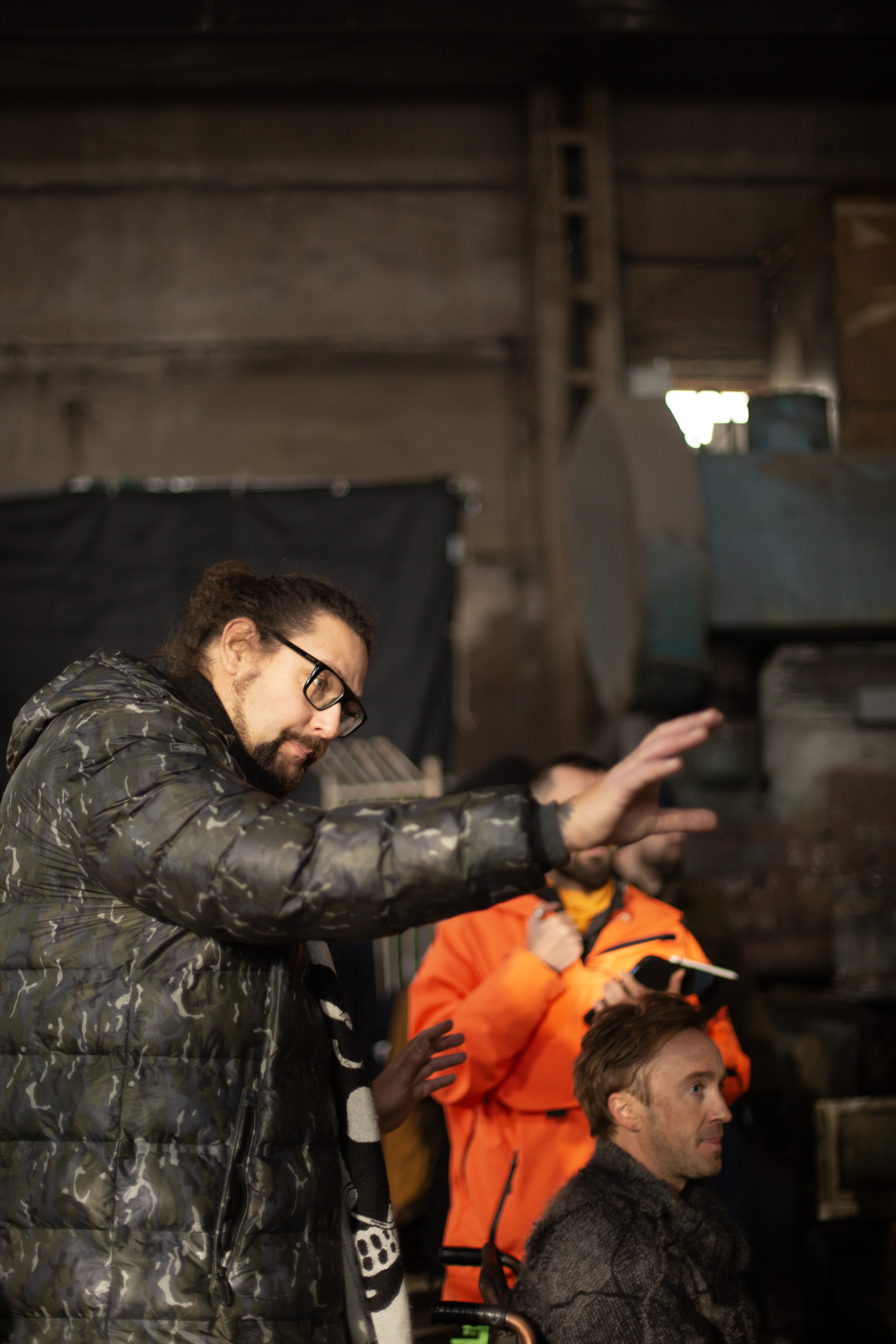
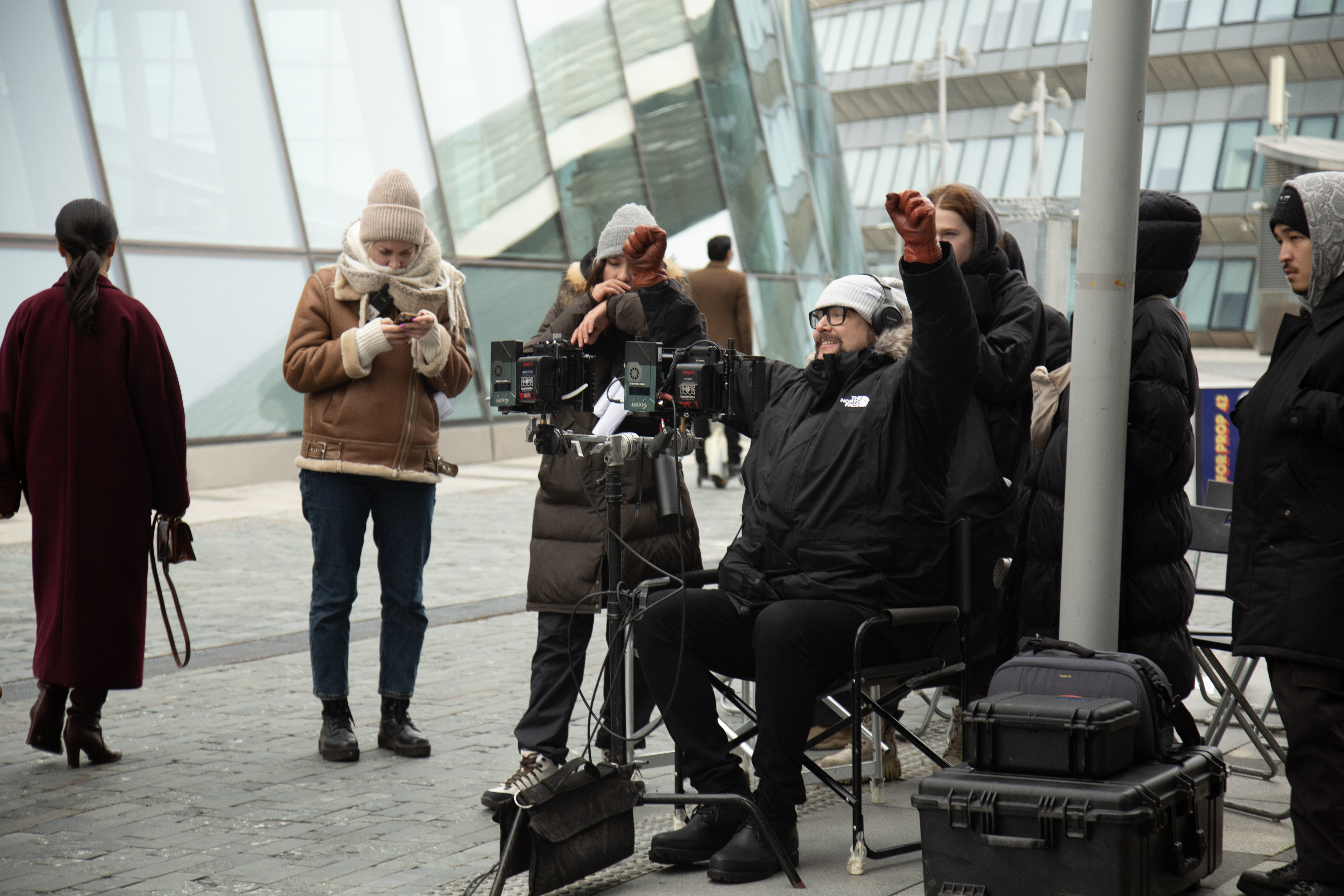
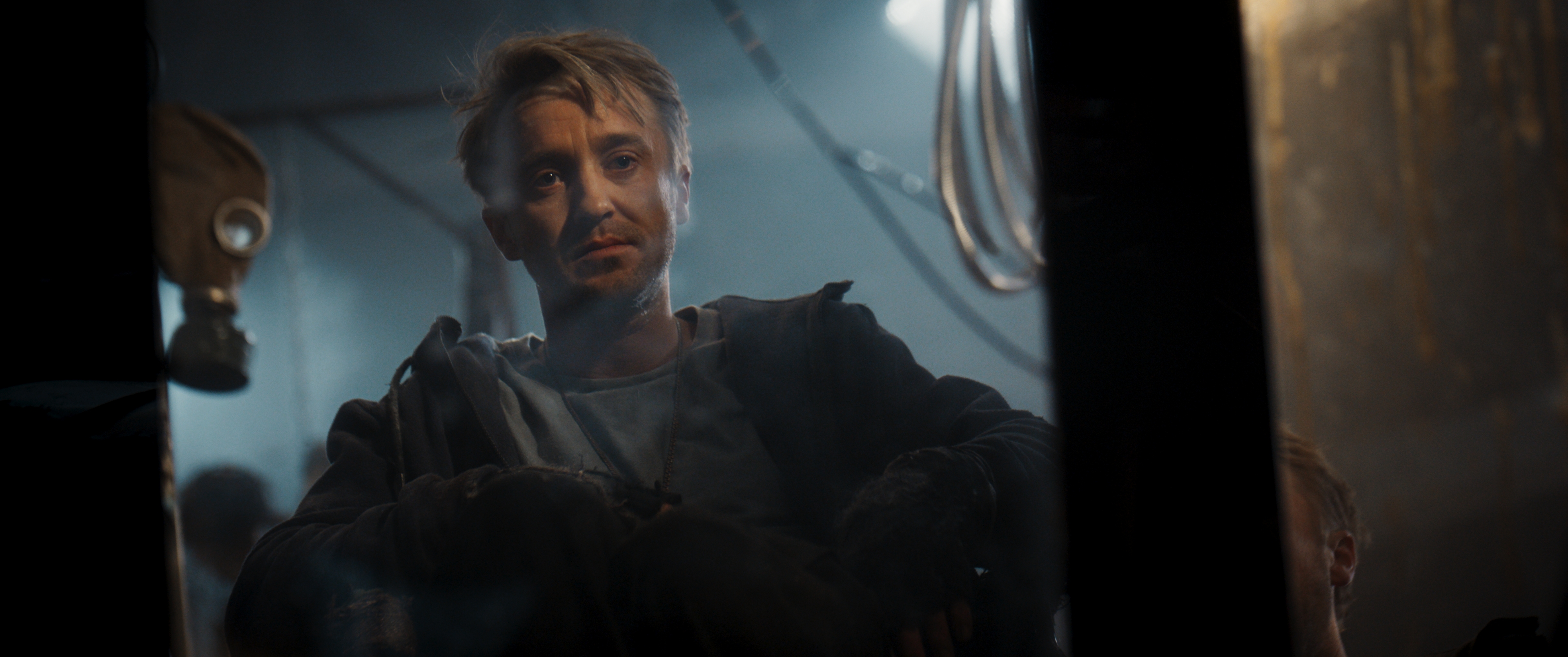
ALTERED was a joy to make — a wild journey that took me all the way to Kazakhstan, where we shot the entire film with an international crew. The cast includes Tom Felton (of Harry Potter fame), Aggy K. Adams (The Witcher), and the incredible Richard Brake, whose résumé could fill a hundred brilliant films.
The project had a long gestation — it began while I was filming 97 Minutes — but when it finally came together, it was worth every moment. Working with Tom Felton was a particular highlight; his performance was so dedicated and heartfelt that I hope audiences will feel that energy radiating from the screen.
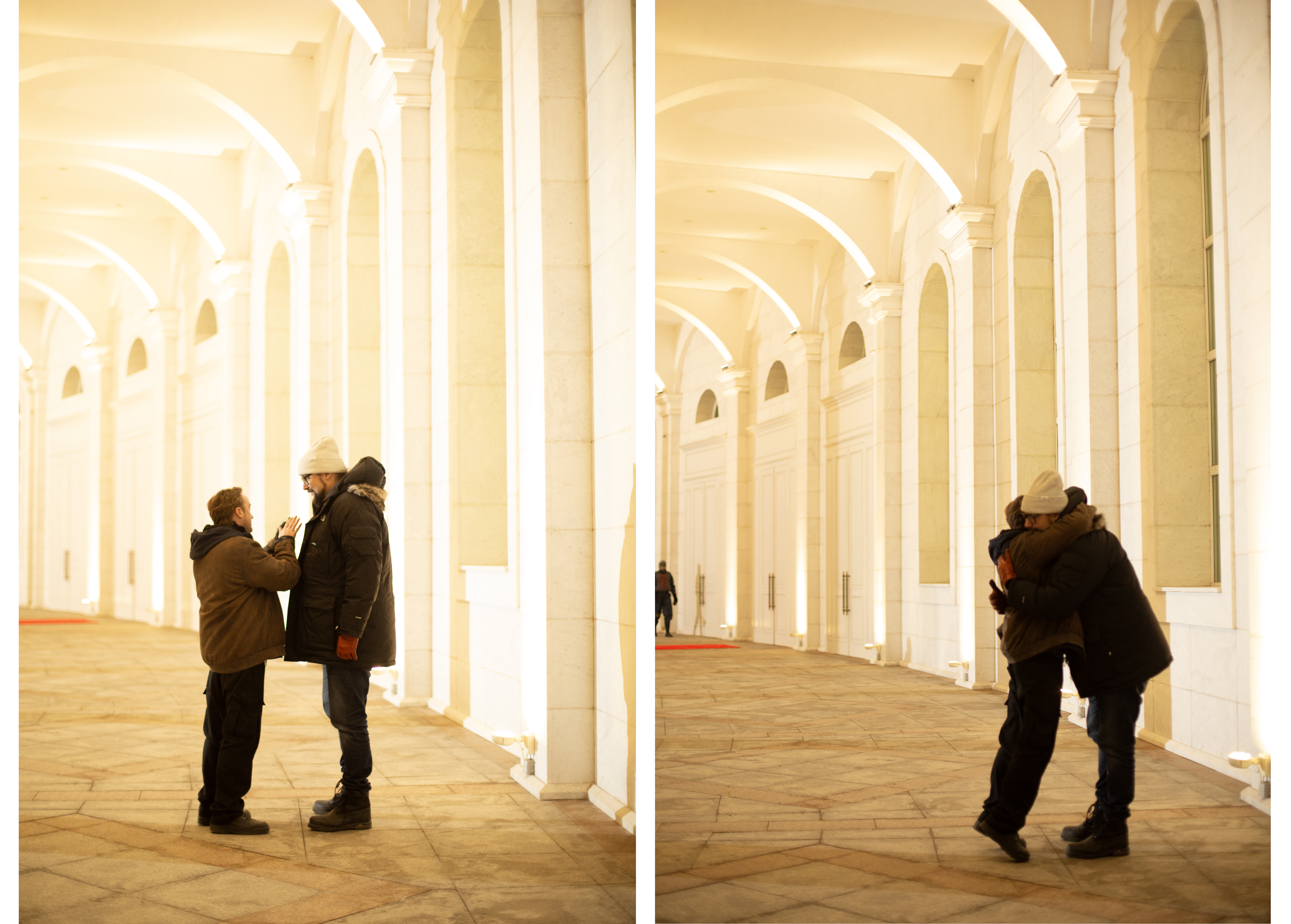
Sometimes, all the direction they need is just a little hug.
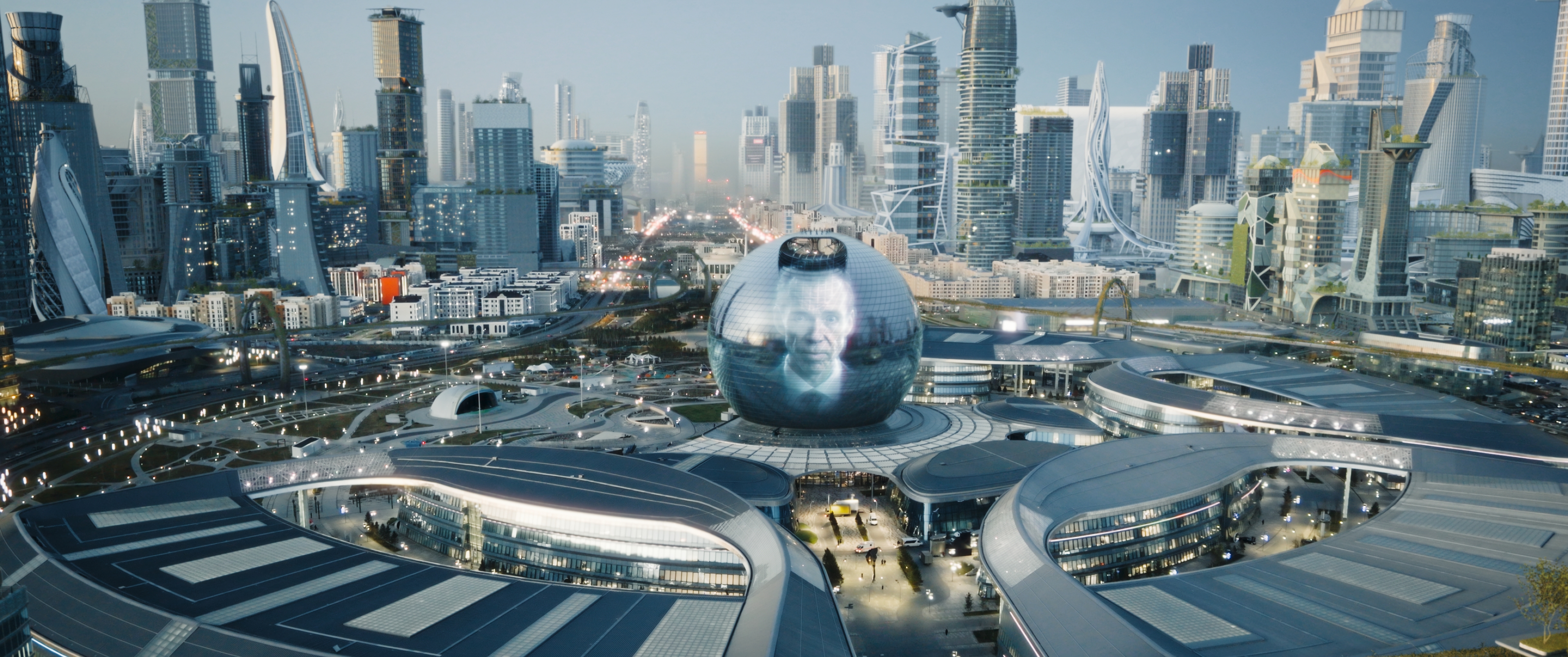
Kazakhstan turned out to be a fantastic playground for filmmakers. We shot in Astana, the capital, chosen for its futuristic skyline — a city that already looks straight out of science fiction. We barely had to add any VFX for the wide shots to make it feel otherworldly.
(Well… a few CG tweaks here and there — but you get the idea.)
The film is coming out soon, and I’ll share the trailer the moment it drops.
Meanwhile, I’m gearing up for two new projects: MIDAIR, a high-tension airplane thriller, and SECOND PEAK, a large-scale disaster movie.
But the big one — the one I’m truly diving into now — is something very close to my heart: DEEP RED.
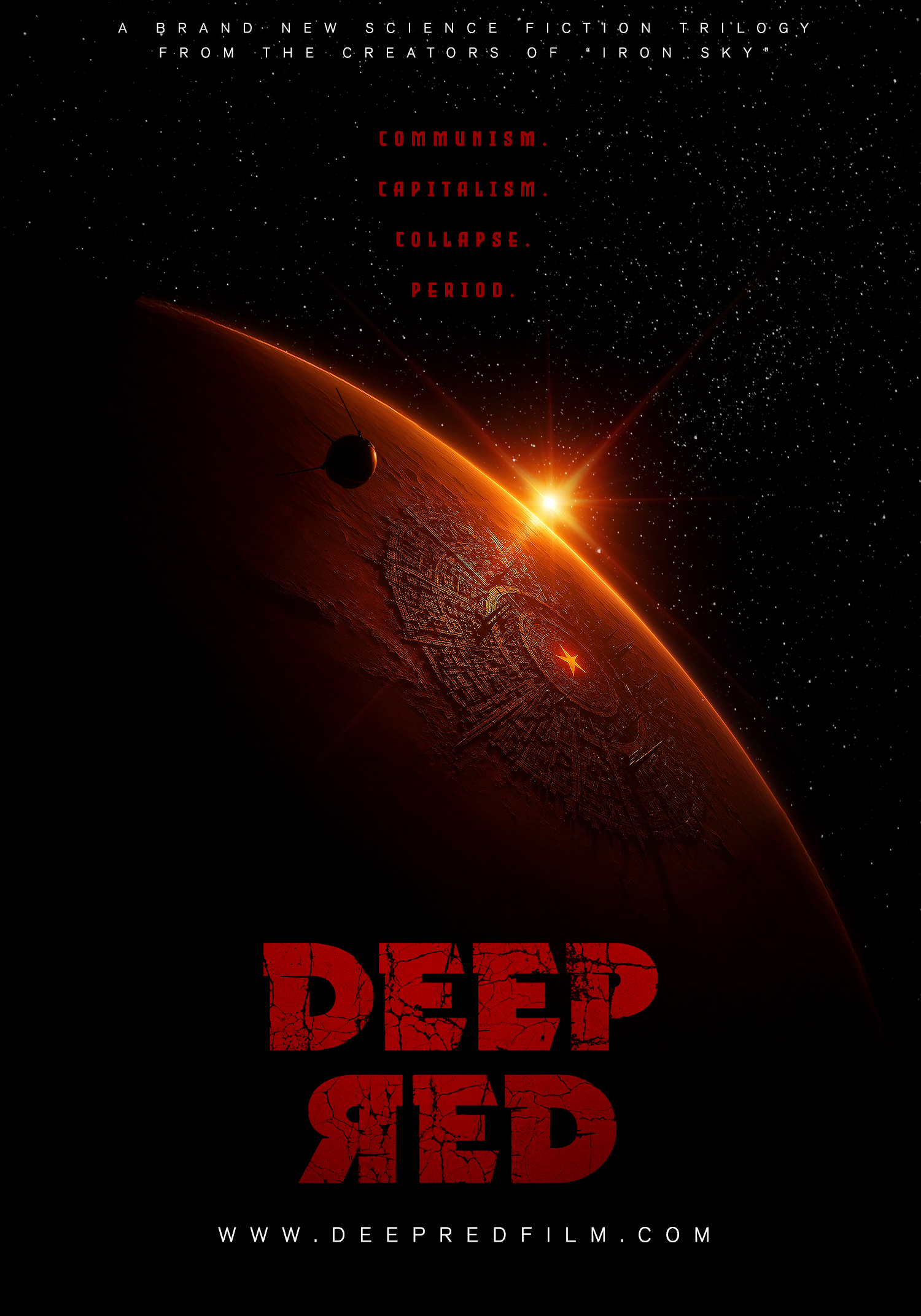
DEEP RED is a science fiction trilogy born from the same creative vein as IRON SKY, but this time we’re going bigger, bolder, and stranger. The story follows an astronaut who crash-lands on Mars and discovers a full-fledged Soviet utopia, thriving under the iron rule of an AI modeled after an old Soviet chess computer.
Here’s our first teaser poster:
We’re reuniting much of the original IRON SKY team and planning to crowdfund again. In a world where traditional film financing is practically extinct, this feels like the only way to build original IPs without the strings of major studios.
Finnish audiovisual culture is at a crucial turning point. As a newly minted NATO member and an increasingly prominent player on the global stage—both as an independent nation, a European country, and a Nordic state—Finland is drawing more international interest than ever before. At the same time, the country’s immigrant population is growing rapidly. In 2000, only about 2% of Finland’s population (100,000 people) had a foreign background. By 2025, this number has risen to roughly 9% (500,000 people), and projections estimate that by 2045, it will reach 15%—around one million residents. (Stats: Tilastokeskus)
In an increasingly globalized world, cultural visibility is key. Finnish culture is gaining international recognition, yet an unfortunate barrier remains: language accessibility.
Havumetsän lapset (English: Once Upon A Time In Forest) is a Finnish-language documentary about an internationally crucial topic of forest preservation, which has been seen and distributed worldwide in many countries. In Finland, it’s only available in Finnish language, with Swedish subtitles. Image capture from YLE Areena.
Finns are known for their strong English skills—Finland ranks seventh globally in English proficiency, with approximately 75% of the population speaking English at a functional level. Despite this, Finland’s second official language is Swedish, spoken conversationally by only around 15% of the population. Due to its official status, all Finnish media—films, TV shows, and documentaries—must be subtitled in both Finnish and Swedish, but not in English.
I became acutely aware of this issue after marrying a British citizen who, unsurprisingly, doesn’t speak Finnish. We watch a lot of films and TV together—partly out of personal interest, partly due to our professions—and I’ve made it my mission to introduce her to Finnish culture. She has enthusiastically embraced it, eager to explore our history, arts, and storytelling. But time and again, we hit the same roadblock: the language barrier.
Finland produces 15-20 feature films a year and for example in 2022, 30 TV shows, the vast majority in Finnish. However, Finnish productions rarely travel beyond film festivals, making domestic platforms the main place to watch them:
Movie theaters, where Finnish-language films are subtitled in Swedish.
Streaming services like YLE Areena, Netflix, and Viaplay, which typically offer subtitles in Finnish and Swedish.
Online rental services (Apple TV, Blockbuster, Viaplay), which provide subtitles in Scandinavian languages—but never in English.
Physical media (Blu-rays and DVDs), which also omit English subtitles despite offering Scandinavian options.
Too often on Netflix and other Nordic-available streaming services, the subtitles are available in several languages, but nearly never in English. Only exception I found was Lapua 1976, which indeed had English subtitles.
This means that unless a film is screened at Orion Cinema in Helsinki (one of the only places offering occasional English-subtitled screenings) or showcased at a film festival, there’s no legal way for non-Finnish or non-Swedish speakers to access Finnish media—except through piracy. And while AI-assisted subtitle generation is improving, is that really the direction we want to push viewers toward?
The lack of English subtitles disproportionately affects Finland’s growing immigrant population, effectively locking them out of Finnish-language entertainment. Media plays a crucial role in cultural integration, particularly for young immigrants, yet Finnish TV and film remain largely inaccessible to those who don’t speak Finnish or Swedish. This results in an entire segment of Finland’s population growing up without exposure to Finnish media, culture, and storytelling.
The irony of it all is that English subtitles already exist for most Finnish productions. They are created for when shopping for international distribution and trying to get access to film festivals, meaning the content is already subtitled. Yet, for some reason, these subtitles are rarely made available to domestic audiences. Given how simple it is to add subtitles to digital media (and even physical releases), there’s no logical reason why platforms like Netflix, Apple TV, Viaplay, YLE Areena, and others don’t include an English subtitle option.
I know there will be pushback—”Yes, but…” arguments — but let’s be clear: it’s 2025. This is entirely doable. Finnish films and TV shows are some of our best cultural exports, rich in storytelling, history, and artistic vision. Right now, Finland is primarily known abroad for sports figures and dancing politicians and handful of dated clichés — isn’t it time our cinema and television were given a chance to represent us internationally?
And there’s money in it, too! Expanding accessibility means expanding audiences—both among Finland’s growing non-Finnish-speaking population and internationally. More viewership equals more revenue. It isn’t rocket science to calculate this.
Nowadays, I try to watch Finnish content with my wife and act as a simultaneous translator. I’ve grown pretty good at it, you should see me at work, but honestly, that’s not a very viable solution – and doesn’t work at movie theaters, by the way.
So, to all major streaming and media platforms—Netflix, MAX, Disney+, Apple TV, Viaplay, Elisa, Ruutu, YLE Areena—add English subtitles to Finnish content. And to Finnkino—start scheduling English-subtitled screenings of Finnish films. You can do this!
This is a cultural investment, a step toward accessibility, and a decision that will pay off financially, too.
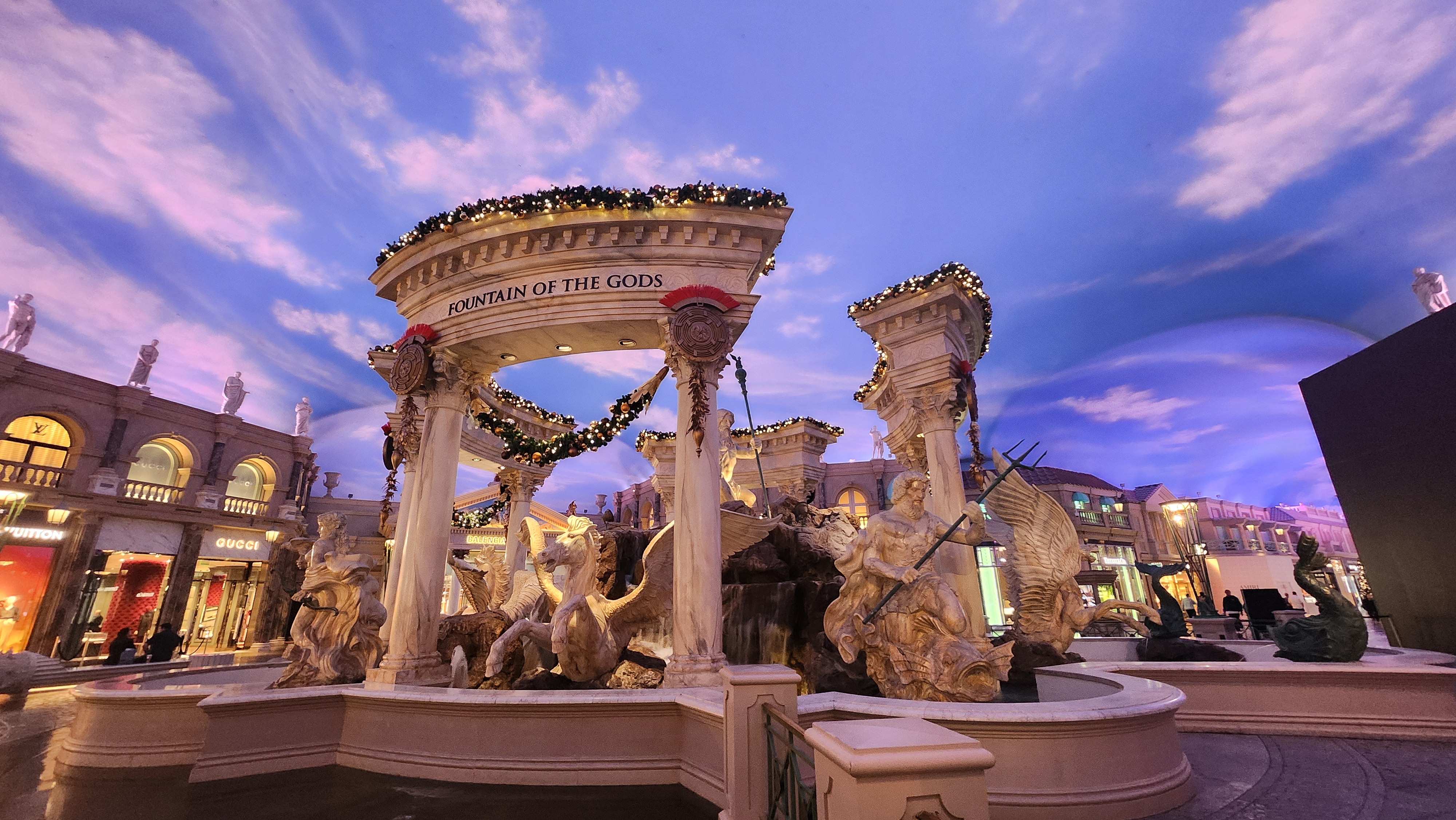
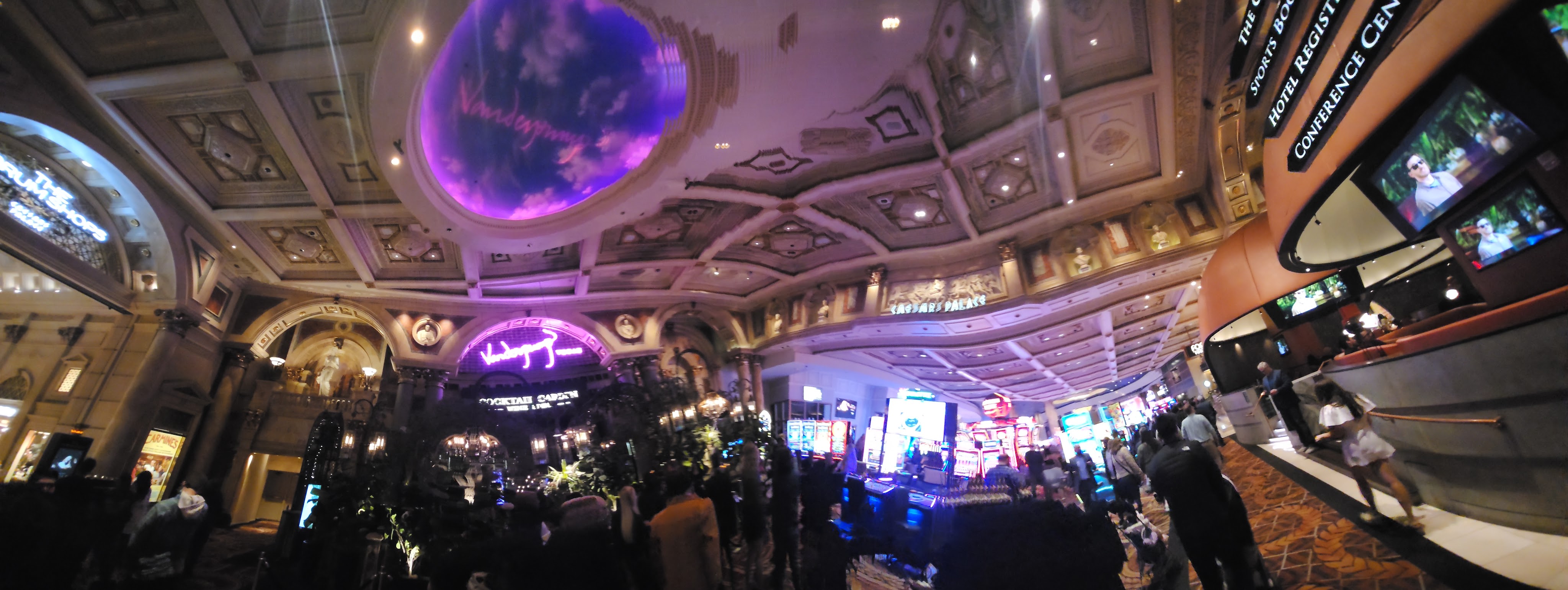
There’s a saying, which goes like this: “What happens in Vegas, stays in Vegas.” It’s a city slogan R&R Partners came up in 2003 to promote the carefree adult playground atmosphere of Las Vegas. Prior to this, the city’s been known as the “Entertainment Capital of the World” and people have been telling that “Vegas is calling”. Whatever the case, the city has been pumped full of expectations of the naughtier nature and unsurprisingly, the moniker “Sin City” is well earned.
None of this is real. Not even the ‘blue sky’, it’s just a projection.
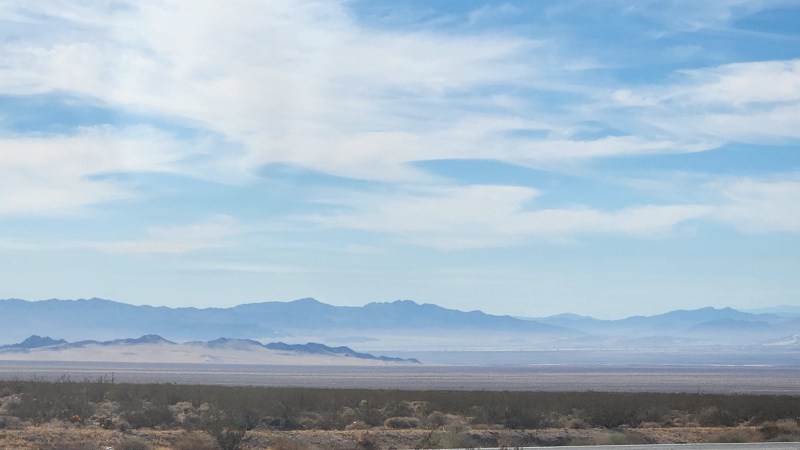
So, it goes without saying that I’m not going into too much detail about what happened on our trip to Vegas because, well, some things really should stay there. What I can share is that it involved countless casinos, a visit to a multi-millionaire’s mansion, and one of us—me or my producer Tero (I’m not saying who)—vomiting all over our Airbnb. We explored dingy bars tucked away in the side streets beyond the flashing lights of Fremont Street, dined at Robert De Niro’s restaurant, downed multiple bottles of ridiculously expensive sake, and embarked on long road trips through the Nevada desert, nervously wondering if our driver’s unpaid speeding tickets might catch up with us.
Weird world of Vegas casinos.
But we made it through in one piece, weirdly so. We returned back to Los Angeles from where our journey to Vegas’s American Film Market begun a few days prior and arranged a bunch of meetings with business associates we knew, to pitch our horror film projects. We met with Marvel writers, Netflix casting agents, independent producers and such likes, in places such as Roosevelt Hotel, where they had held the first-ever Oscars almost a hundred years ago.
A view from our AirBnB in LA.
Second to last night, we went downtown to a cool little Asian joint, to catch up with someone I knew from before.
This guy was late—not just 10 minutes like he claimed, but a solid 45. His excuse? “Traffic in LA, man.” Sure, maybe he came from some congested part of town, but it didn’t seem likely. When he finally showed up, he strutted in like he owned the place, talking nonstop about himself, his projects, and even griping about Finland after a brief visit there months ago. It was an odd start to an evening that was supposed to be a thank-you dinner for helping him connect with some important players in the business.
Over Asian food, the guy, a visiting talent agent from Europe with a few projects to pitch, did what he does best: sell himself. He promised “dinner’s on me” earlier in the week, but when the bill came, he didn’t touch it. Instead, we ended up splitting it three ways while he griped about tipping in LA. Sure, tipping culture can be annoying, but that’s hardly groundbreaking. After some nudging, we convinced him to leave a tip, though it felt more like babysitting than dining with an industry professional.
The real train wreck came when he revived an old dispute with a business associate, refusing to drop the subject despite our efforts to steer the conversation elsewhere. He kept digging until we’d had enough, and we left in frustration. He ran after us with half-hearted apologies, trying to smooth things over, but it was clear – he was his own worst enemy.
Honestly, I couldn’t stay too mad — he has to live with himself, and luckily…
I don’t.
Tero among the stars.
The trip ended with one of us—no names, of course—vomiting all over our LA Airbnb. It had to be the Norovirus, taking us down one by one. A lovely souvenir to bring home to your girlfriend, as someone might have done. Not naming names.
So, did we succeed? Did our little horror film secure funding, cast, and production dates? Absolutely not. (Not yet, at least.) But was it a good trip?
Yeah, post-production means sitting in darkened rooms for weeks, staring at your film slowly coming together. It’s the very antithesis of shooting a movie, but it’s mentally pretty draining. You are making important decisions and trying to keep the big picture in mind, and sometimes it feels like it’s going nowhere, no matter what you try. I try to keep in mind the phrase: “Your film is never as good as your rushes, and never as bad as your first cut.” There’s some truth in that, it can be very terribly disheartening to watch for the first time, as your whole soul and the weeks of your work and everyone’s work under your authority come to plain daylight. But as you start the work, finessing the scenes and honing the details, rearranging big chunks that allow you to see your whole film in a different light, it gets better. Add foley, sound, and composed music, and you’ve got a whole different beast in your hands.
A ship departing at the old Roman Harbor at the old town of Antalya, Turkey.
But I digress. I wanted to talk about the suffering of the mechanical process of post-production. Usually, it means traveling through wintery Helsinki or whatever city you do the post-production in for at least half an hour to reach the studio, and the same thing back. Usually, for some reason, post-production tends to land in January-February axis at least in my case, and nearly everywhere in Europe the weather is terribly depressing, making the already depressing or at least mentally draining feel ten times worse.
Roman Harbor, Antalya.
So this time, I found a solution: follow the sun. Instead of hauling our asses to snowy Helsinki, me and the editor flew over to Antalya in Turkey and found ourselves at a beautiful beach area where sun shines and it’s an easy 3-minute walk from the apartment to the editing suite. This allows leisurely eating breakfast at one of the beach cafes and dining out at reasonably priced joints serving Mediterranean cuisine. And since my girlfriend tagged along, romantic strolls down the beach promenade are in the menu, as well. Makes the work a whole lot nicer.
Ample breakfasts and beautiful dinners are the name of the game here.
Lately, I’ve been watching Fargo, the TV series. It’s truly a gem I managed to miss back when it started airing, thinking it’s just a cheap ripoff of the Coen brothers’ film, but it’s definitely a standalone TV-series on it’s own. I’ve now plowed through 2 season – first one being the absolutely superior one, second trying to be a bit too funny for my taste – and going through the third season – which I find better than the second one, as well. Instead, though, I should be plowing through the Oscars entries, unfortunately, so I’ll have to take a break from Fargos and focus on the movies, otherwise I’ll never make it by the time the ceremony is, and that would be a travesty.
The Duden Waterfalls. The Dude Abides.
Yesterday was a day off. We finished first version of the cut and sent it out to producers for comments. Me and Lea, we took our asses to the center of Antalya and stayed at a Hilton in the center, enjoying the old town and a short boat trip to the Duden Waterfalls. A welcome break from watching the movie, and coming back with a fresh brain feels great.
A very pretty little coffee with cats, served some fantastic pistachio coffee for us.We even managed to find a proper rock bar at the Old Town – inventively named “Rock Bar”, but sporting some pretty cool Children of Bodom artwork on the wall! Torille!
“If you don’t get physically ill seeing your first rough cut, something is wrong.”
-Martin Scorsese
Filmmaking is a beast. First, you stress your ass off for the funding to come together, then you throw yourself into a trauma-inducing shooting process, and eventually end up watching the first cut and feel devastated: this is what I shot? This is what I bled for?
Every time.
And yet, as it is with everything in a movie, you must trust the process. And the process is simple: you keep your vision clear, and work with professionals to hone the raw material into whatever it will eventually become. In my experience, the more you get to do it the way you believe in it, the better the end result will be. The more outsiders are meddling in the process, the worse the outcome will be.
With Iron Sky movies and Star Wreck, I managed to do things pretty much the way I believed in them, but with Jeepers Creepers: Reborn and 97 Minutes, I didn’t really have too much say on any of the crucial processes, from casting to post-production, and it shows, admittedly. While I keep on being proud of both of those movies, I know they are not what I wanted them to be, as they were taken away from me and finished without my approval and supervision.
Here I am again, with another rough cut of an upcoming movie in my hands. Just watched it yesterday, and was slightly freaked out, but came back to the guideline: trust the process. I’ve once worked on a film where this wasn’t heeded, and the film ended up never being released because the producer panicked and started to run around like a headless chicken, and the whole process fell apart. After, picking the pieces up has been a bit of a journey…
My point being, and this goes across the whole board of pre-, post-, and main stage of the production: just trust the process. The film is cluttered underneath all kinds of gunk and dirt, and the process will unearth it.
I’m ready and hyped up about the next part of it all – post-production. We’re starting editing the movie in just a few weeks, and then it’s all the fun stuff with VFX and music and sound (I love sound, especially foley!!) that are to follow.
One of the perks of living in Lauttasaari are the public saunas around here – but the one I love the most is The Sauna Society’s sauna complex tucked away in Vaskiniemi woods. It’s a private society and one needs two member’s invitation to be able to even join, but luckily my friend and trusted DOP Mika Orasmaa is member and has the invitation right, so we’ve taken a custom to go take a proper sauna session before our respective stints of filming somewhere in the world.
Nine saunas, and great company – what a better way to enjoy a day off?








 Vuorensola.com