It’s Oscars season again, and this year’s Best Picture lineup is packed with politically volatile films. Movies like One Battle After Another and Sinners seem to carry the weight of the world on their shoulders, while Bugonia offers a skewed, unsettling take on the age of conspiracy theories.
As is often the case, however, the documentary category may be the most interesting part of the Oscars. Films such as Mr. Nobody Against Putin, Alabama Solution, and Perfect Neighbour deliver a sobering look at the world we live in today—and hint at where it might be heading.
Now, I’m no film journalist, so I don’t have much insider insight to offer about the top contenders. Instead, I thought I’d do something slightly different: pick one film from each category that almost certainly won’t win—but deserves to be noticed anyway.
So buckle up—let’s begin our tour of the films that have absolutely no chance of winning.
BEST CASTING
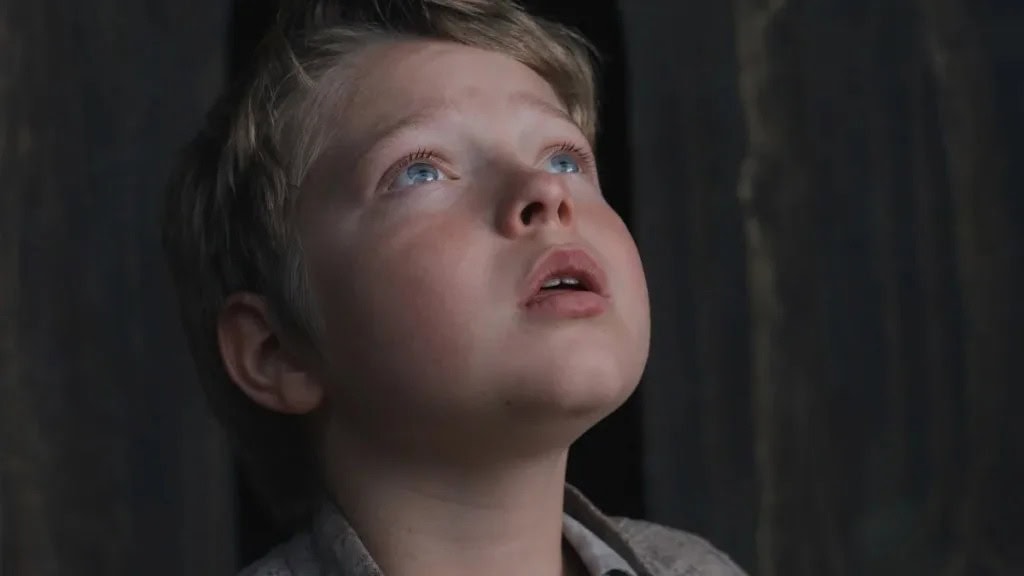
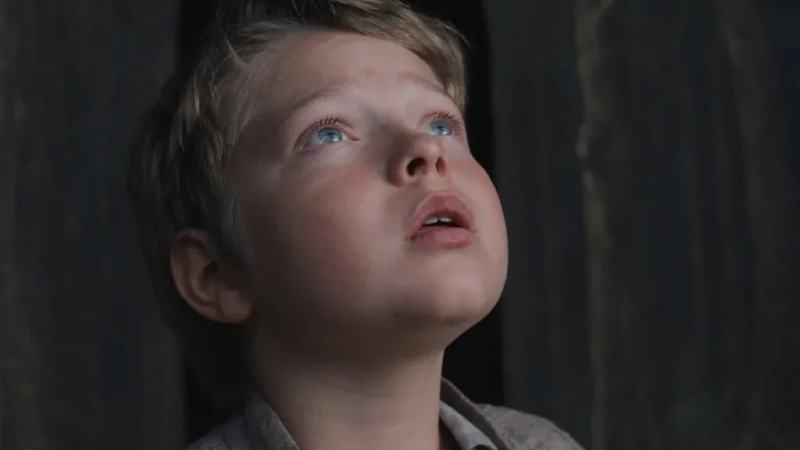
Film: Hamnet (Casting: Nina Gold)
Hamnet was the best film of last year and will probably pick up an award or two. In the new Casting category, however, its chances are slim—this one will likely go to Sinners. Still, Hamnet deserves to be mentioned here because of its extraordinary casting. I assume the casting team must have gone through thousands of young actors, because the result is remarkable: some of the best child performances I’ve seen in any film. The real gold nugget is the casting of brothers Jacobi and Noah Jupe as Hamnet and Hamlet, both delivering stellar performances. Jacobi, in particular, is astonishing—once the story turns dark, his performance had me weeping like Niagara Falls for much of the film. It’s an unusually mature, intelligent, and observant performance for someone so young.
BEST DOCUMENTARY SHORT
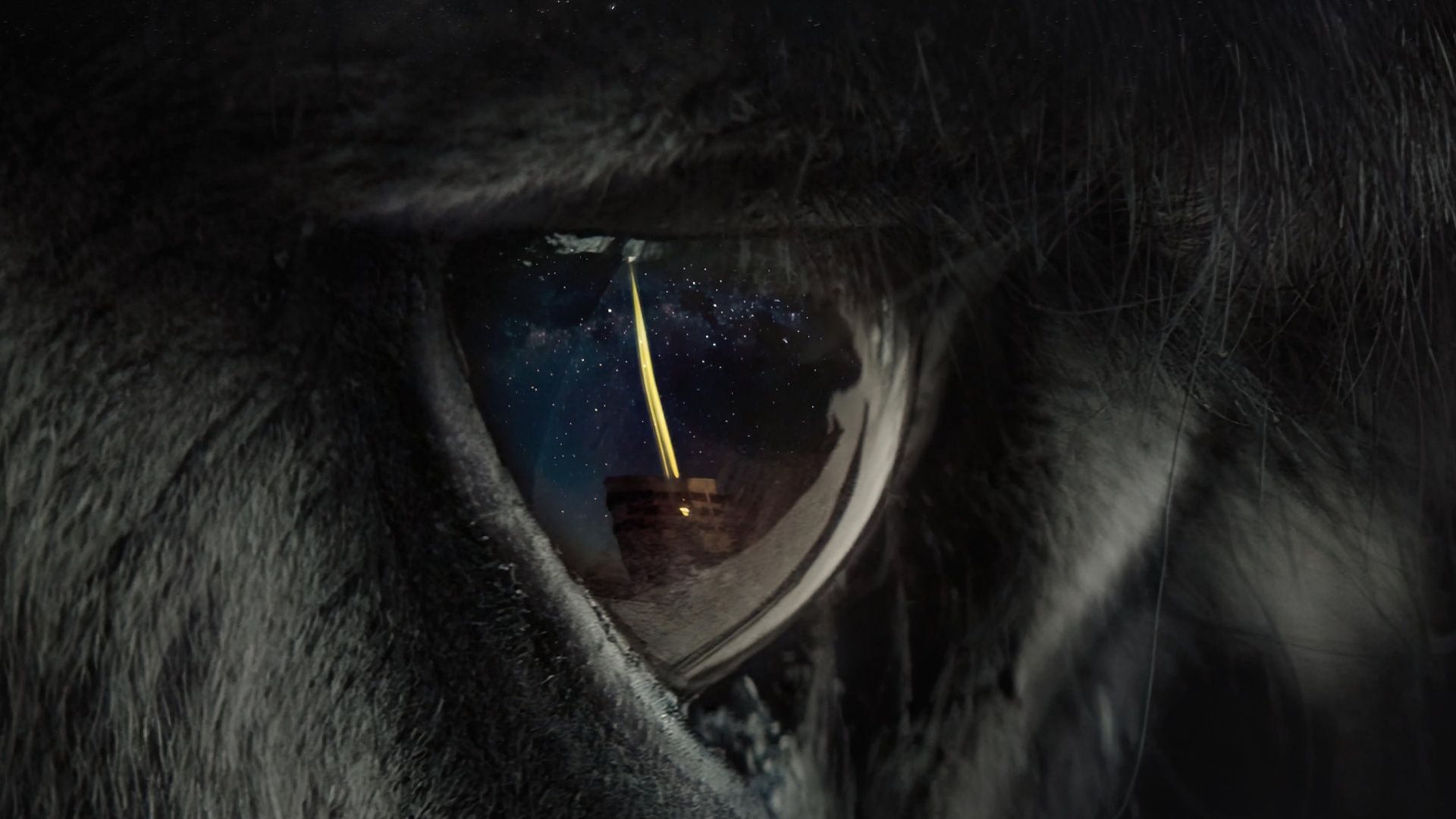
Film: Perfectly A Strangeness (Dir: Alison McAlpine)
I would have loved to make the dad joke about Perfectly A Strangeness and call it a great ass movie, but unfortunately for my brilliant and entirely original sense of humour, the film actually features three donkeys—not asses—who wander into what appears to be an unmanned observatory in the middle of the desert. The category will likely go to The Devil Is Busy, a film about an abortion clinic in Atlanta, and probably deservedly so. Still, Perfectly A Strangeness completely melted my heart. Watching these donkeys quietly observe the universe, their presence juxtaposed with the slow, methodical turning of humanity’s instruments of discovery, creates a strangely profound effect. It gently reminds us how little either species really understands about what’s going on out there. In the end, we’re probably just a bunch of stubborn donkeys ourselves, standing on a rock spinning through the universe, and whatever we achieve here will likely be lost to time—just like the quiet journey of these donkeys. The difference is that they don’t seem to worry about it. They have places to be. They might pause for a moment to wonder what these noisy monkeys have built now, staring up at the massive satellites, but they don’t stop to explain the universe. They simply continue on their donkey business—which, frankly, might be the wiser approach.
BEST VISUAL EFFECTS

Film: The Lost Bus (Visual Effects by Charlie Noble, David Zaretti, Russell Bowen, and Brandon K. McLaughlin)
Yes, it seems fairly clear that Avatar will win this category—as it probably should—and if it doesn’t, it will feel like a major travesty. Still, as an outlier, I wanted to mention The Lost Bus. Matthew McConaughey -starring, seemingly small-scale action film (although, from what I’ve read, it reportedly cost around $100 million, so perhaps not that small after all) tells the story of the massive forest fire in Paradise, California, that left 85 people dead and became the deadliest wildfire in U.S. history. Directed by Paul Greengrass, the film does a visually remarkable job of creating a world that appears to be literally burning around the characters. Having worked on a project dealing with a similar subject myself, and having spent some time thinking about how visual effects could depict such an environment, I was genuinely impressed by how grounded and convincing the film’s VFX are. The team combines LED screens, CGI, and Unreal Engine environments to build an intensely chaotic setting that still feels real and physical. In an era when AI is starting to take over much of the heavy lifting in visual effects, it’s refreshing to see handcrafted work executed with such precision by highly skilled professionals. There’s also a documentary on the same event on Netflix, Fire in Paradise, which I highly recommend—it’s a harrowing watch, touching on themes of climate change and corporate negligence.
BEST CINEMATOGRAPHY

Film: Train Dreams (Director of Photography: Adolpho Veloso)
There was something strangely familiar about Train Dreams while I was watching it—a nagging feeling that I’d seen this film, or something very much like it, many times before. And then it hit me. Of course, I had. At its heart, this may be the most Finnish film in any category this year: essentially a classic tukkijätkä story—a logger’s tale from the old days—soaked in that particular kind of quiet Finnish melancholy. The cinematography follows suit beautifully. There’s something deeply appealing about its ultra-naturalistic style, with very little artificial lighting, and the 3:2 aspect ratio that resembles an old photograph. It carries the story forward in a slow, patient, unhurried way. In an era where it competes with the lavish spectacle of films like Frankenstein or Sinners, a film like Train Dreams might not shout very loudly—but it’s lovely to see that the Academy still shows some appreciation for the beauty of traditional, understated cinematography.
BEST FILM EDITING
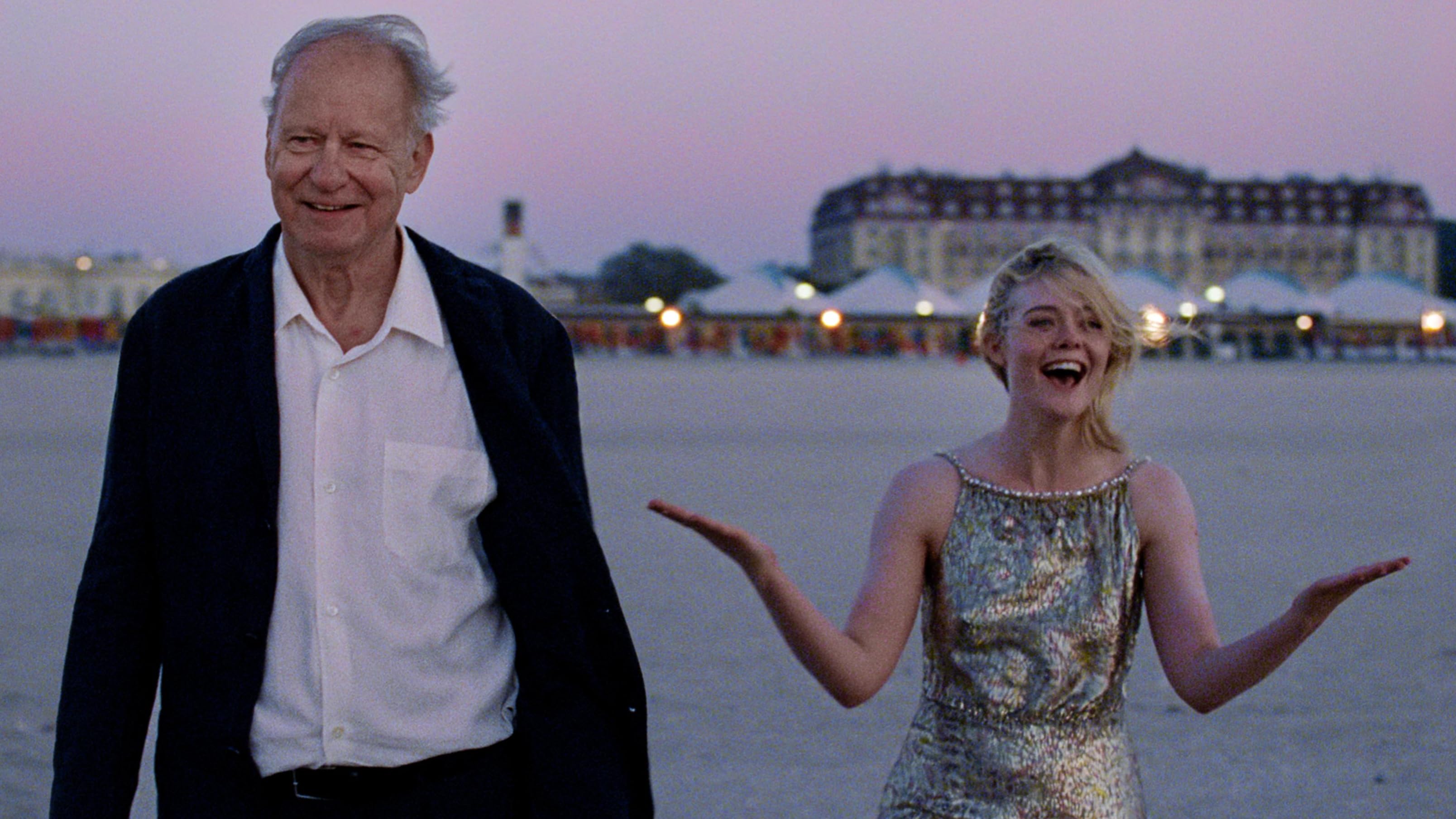
Film: Sentimetal value (Editor: Olivier Bugge-Coutté)
Editing, much like directing, is often hardest to notice when it’s done well. The films that tend to win in this category are usually the ones with the most dynamic—read: fast-paced—editing, and that will likely be the case this year as well. F1 fits that description perfectly: rapid, rhythmically precise, extremely complex, yet always easy to follow. The more classical approach to editing, however, still has its value. The presence of Joachim Trier’s Sentimental Value among the nominees suggests there is still some appreciation for it. In many ways, the film is the antithesis of F1: it lingers on scenes, allowing them to breathe, and cuts not when the dialogue demands it but when the emotional rhythm of the moment allows it. It weaves between timelines and emotional states so gracefully that you barely notice the editing at all—which, as the old saying goes, means it’s working.
BEST SOUND
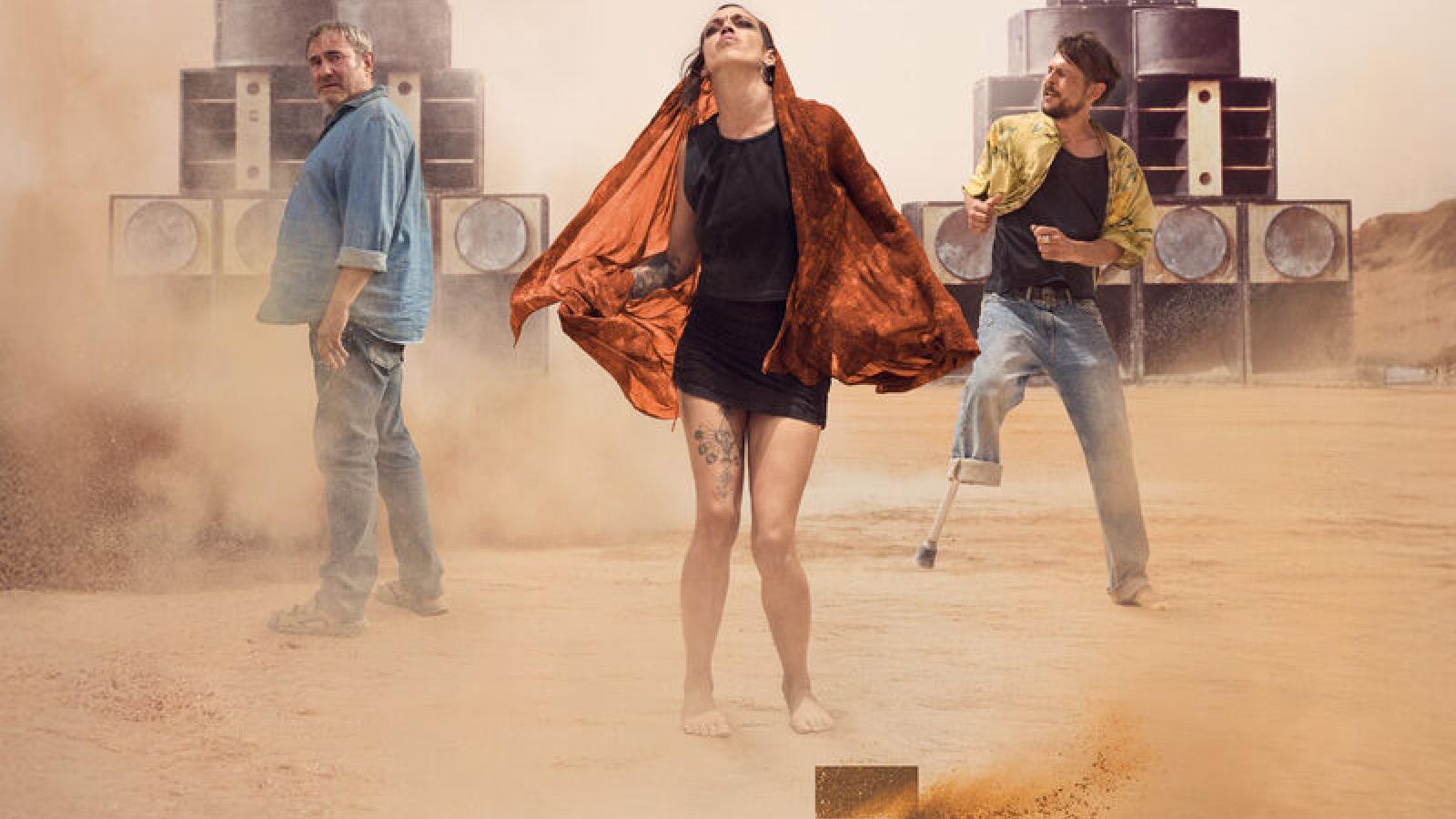
Film: Sirât (Sound Designers: Amanda Villavieja, Laia Casanovas and Yasmina Praderas)
Admittedly, I didn’t see Sirât in a cinema, which unfortunately means I probably didn’t experience the full depth of its sound design the way it was meant to be heard. Still, given how central music is to the film—and to the trance-like state it tries to evoke—it feels like a fitting presence in a category often dismissed as one of the “technical Oscars.” Sirât builds its world around three basic elements: trance music, the enclosed spaces of car interiors, and the vast emptiness of the desert. Only sudden bursts of violence—explosions, ruptures—break this strange holy trinity, and when they do, they feel like an outside force intruding upon a slowly building hypnotic circle. Realistically, Sirât probably has no chance against heavy hitters like Sinners or F1, but as a nod to the kind of immersive audio landscapes that transcend traditional sound editing, it’s wonderful to see it included.
BEST PRODUCTION DESIGN
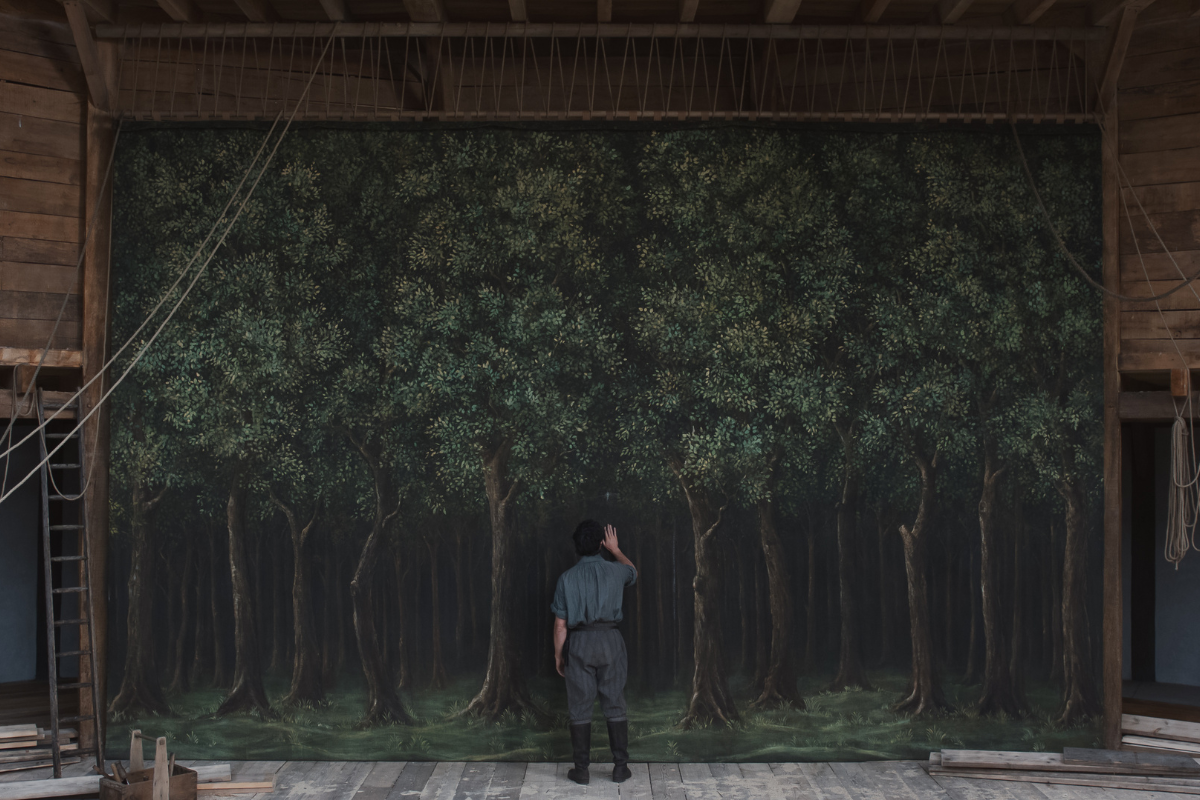
Film: Hamnet (Production Design: Fiona Crombie; Set Decoration: Alice Felton)
Looking at the Oscar categories sometimes makes me wonder whether only five films of any importance are made each year. The same handful of titles tends to repeat across the nominations in slightly different orders, while many deserving films are left out. In Best Production Design, for example, one could easily have imagined nominees like Nuremberg, Wicked: For Good, or even Fantastic Four: First Steps. But since we’re once again looking at the familiar contenders, I’d like to point out Hamnet, which almost certainly won’t win—Frankenstein will probably take it—but remains a beautifully designed film. The interiors of the hut, the kitchen, and the Shakespearean theatre are all meticulously realized, each space feeling authentic and lived-in. And then there’s the moment when Hamnet passes beyond the veil of shadows: the set is striking in its simplicity. No lavish constructions, just a few carefully chosen elements—and the result is quietly heartbreaking, proving that sometimes the simplest design choices hit the deepest emotional notes.
BEST MAKE-UP AND HAIRSTYLING
/elle-india/media/media_files/2025/10/08/the-smashing-machine-2025-10-08-17-18-07.png)
Film: The Smashing Machine (Make-up and Hairstyling: Kazu Hiro, Glen Griffin and Bjoern Rehbein)
There are usually both lavish and minimalistic contenders in this category, and this year is no exception. From Frankenstein’s reimagined monster to the genre-stretching splatter of Sinners, the competition will likely be decided somewhere between those two. The Smashing Machine, however, takes a very different approach, achieving its effect with remarkable restraint. The world of UFC is ugly and brutal—a sport where faces are beaten into strange and inventive shapes—and the film captures that rawness by never trying to exaggerate it, instead keeping everything grounded and painfully real. The fact that they managed to make Dwayne Johnson nearly unrecognizable is an achievement in itself, and I suspect the realism of the makeup may even have helped bring out his unusually candid performance. The cauliflower ears are meticulously researched and applied where needed—though many of the fighters and extras probably brought their own—and the sweaty, battered atmosphere of the film feels authentic from start to finish.
BEST COSTUME DESIGN
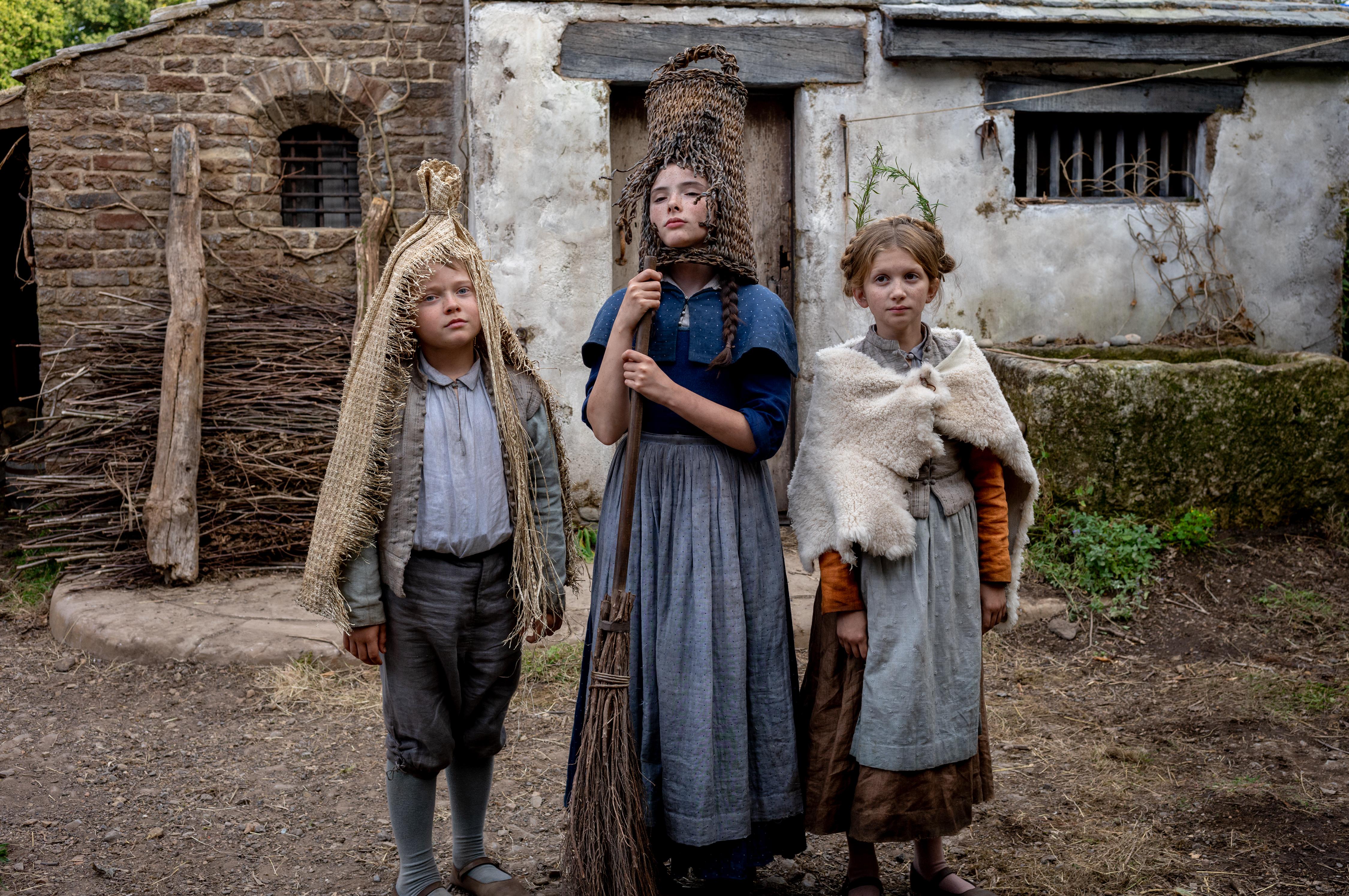
Film: Hamnet (Malgosia Turzanska)
Period dramas—preferably lavish ones—tend to dominate this category, so a win for Frankenstein seems quite likely. Still, Hamnet deserves recognition for its beautifully restrained work. The film brings its world to life with costumes that are simple, muted, and grounded, yet rich in texture and completely believable. Everything feels carefully researched and meticulously crafted. William Shakespeare’s worn leather vest looks as though it might have survived a stabbing by Brutus himself, and the overall color palette blends seamlessly with the film’s environment. It may not be the loudest costume design of the year, but it’s certainly one of the most thoughtful—and well worth a mention.
BEST DOCUMENTARY FEATURE
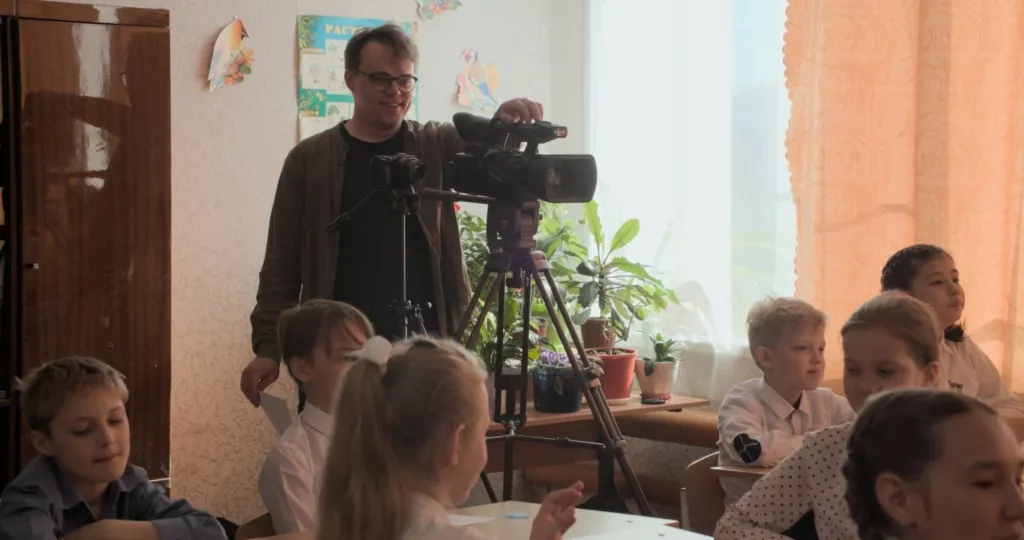
Film: Mr. Nobody Against Putin (Directors: David Borenstein, Pavel Talankin; Producers: Helle Faber and Alžběta Karásková)
Documentaries are the Oscar category I enjoy the most, partly because they rarely make it into regular theatrical circulation, so I always try to watch as many of them as possible. This year, Netflix’s A Perfect Neighbour seems like a likely winner—and deservedly so, as it dives straight into the heart of contemporary American tensions. But for me, Mr. Nobody Versus Putin was the one that hit the hardest. The film follows a young teacher in a small Russian school somewhere deep in Siberia, showing how the invasion of Ukraine slowly reshapes everyday life around him. As the war unfolds, more and more propaganda begins to seep into the curriculum, until the entire school system starts transforming into a vehicle for state messaging. At the same time, the army begins recruiting young men from the village, sending them into a war that few of them seem to truly believe in. It’s an eye-opening documentary, and while its events are unfolding in Russia today, the mechanisms it reveals don’t feel nearly as distant—or as unique—as one might hope.
BEST ANIMATED FEATURE
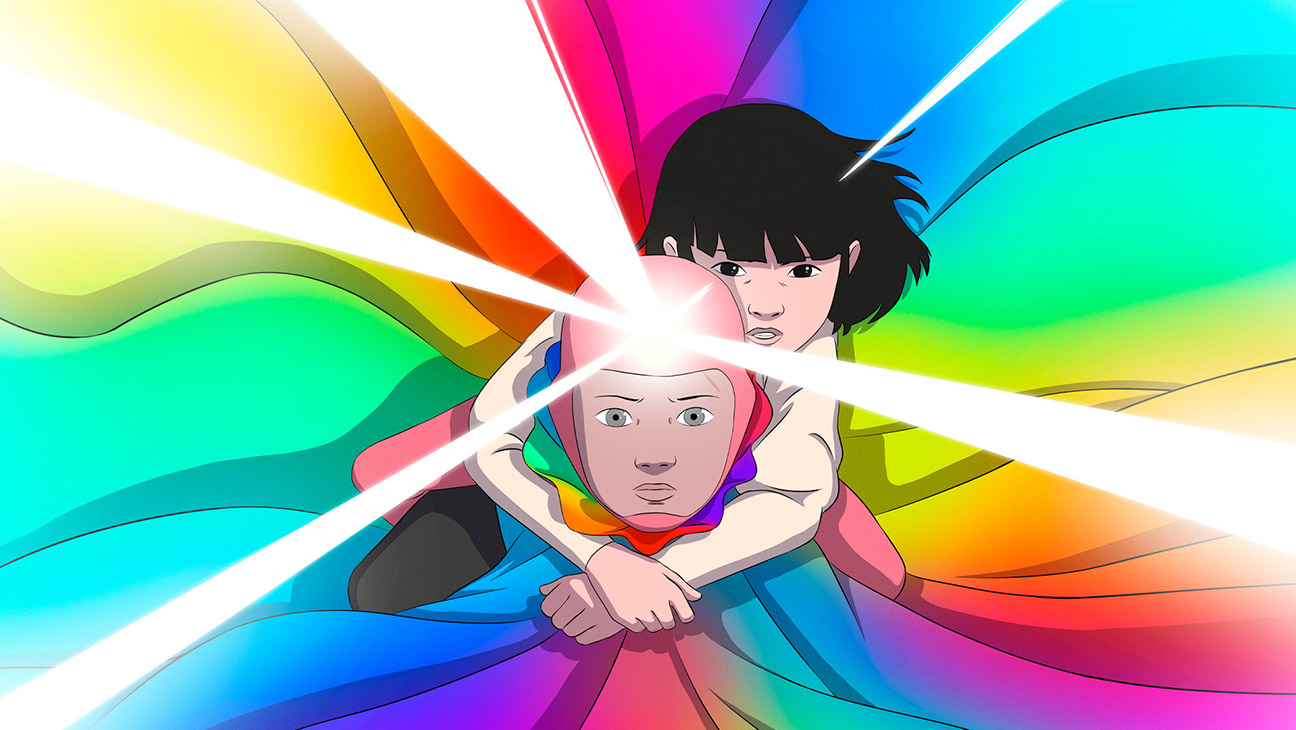
Film: Arco (Directors: Ugo Bienvenu, Félix de Givry; Producers: Sophie Mas and Natalie Portman)
As the father of a now 21-year-old son, I don’t get to see the latest animated films nearly as often as I used to. Back in the day, we would regularly go to see the newest Pixar or Ghibli release together. These days it’s a much rarer occasion that I sit down to watch an animated film—except during the Oscars. That ritual at least keeps me somewhat in the loop with the biggest titles each year. One thing I’ve noticed, though, is that many modern animations have become much more shouty and over-reactive, clearly tuned to the supposedly shrinking attention spans of younger audiences. Of course, these are enormous productions that have to pull in massive crowds, so the logic is understandable. But once the shouting starts, I tend to zone out, and the rest of the film sort of glides past me. This year, Zootropolis, K-Pop Demon Hunters, and to some extent Pixar’s Elio had that effect on me. I’m fully aware that K-Pop Demon Hunters will likely win, but the film that really captured me was the Ghibli-like Arco. Its peaceful pacing, its charming 1960s-style sci-fi sensibility, and its beautifully simple animation style felt like a balm for the brain compared with the louder entries in the category. It clearly has no chance of winning, but I’m very glad I watched it—without my Oscar completionist tendencies, I probably wouldn’t have.
BEST INTERNATIONAL FEATURE

Film: It Was Just An Accident (France; Director: Jafar Panahi)
I didn’t love It Was Just an Accident unconditionally, much like I didn’t fully connect with last year’s The Seed of the Sacred Fig. There’s something about these films that loses me a little when the story starts drifting into the more absurd territory. Still, I liked it enough to want to talk about it. The film follows a group of people who decide to kidnap and kill a man they believe was a guard at a government facility where they had all been tortured. What begins as a relatively straightforward drama gradually grows darker—while at the same time becoming increasingly absurd, even veering into moments of strange, almost crazy comedy. Beneath that, the film clearly grapples with Iranian realities, touching on life under an oppressive regime. Its director, Jafar Panahi, is one stubborn man and a genuine champion of freedom of expression. He now faces a significant prison sentence for making the film and for continuing to defy the 20-year filmmaking ban imposed on him. It wouldn’t even be the first time he’s ended up in jail because of his films—which, if you ask me, is about as real and badass as filmmaking gets.
BEST ORIGINAL SCORE
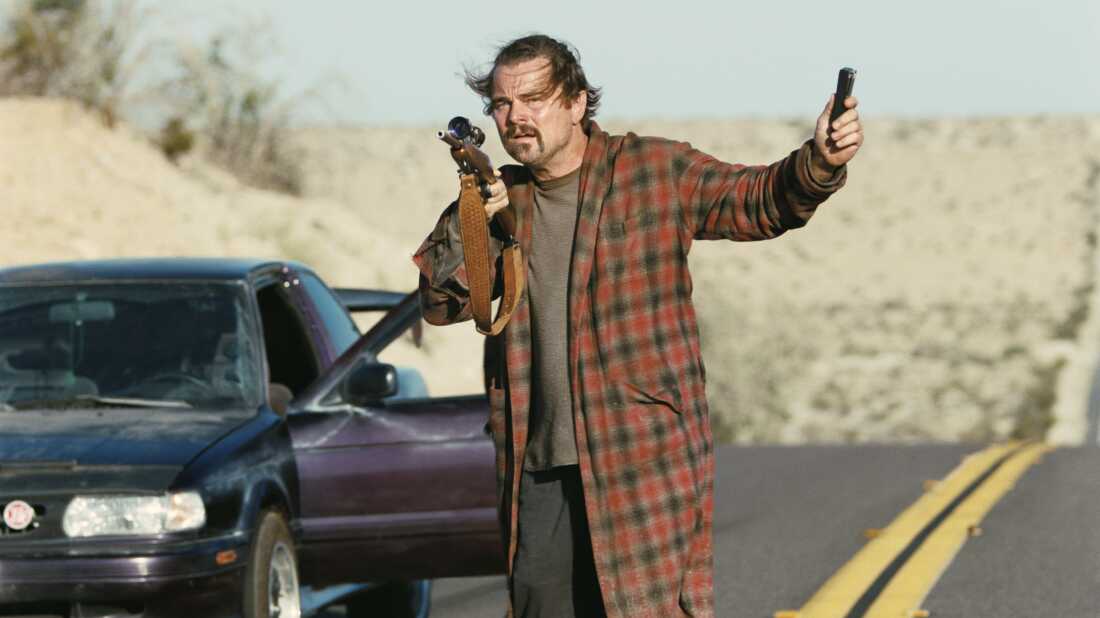
Film: One Battle After Another (Composer: Jonny Greenwood)
Sinners will almost certainly win Best Original Score, and rightly so—Ludwig Göransson’s work is outstanding. Still, my personal favorite this year was One Battle After Another. Jonny Greenwood once again delivers a minimalistic masterpiece that perfectly matches the off-the-wall insanity of the film. It’s another great reminder of how profoundly a score shapes a movie: change the music, and you’d have an entirely different film. Greenwood’s piano plinks and plonks its way through the narrative, violins sketch dizzying sonic images, and the drums provide a strange, restless heartbeat. The result is a score that feels uniquely unhinged and perfectly in tune with the film’s chaotic spirit.
BEST ORIGINAL SONG

Film: Diane Warren: Relentless (Performed by Kesha, written by Diane Warren)
If there’s one statistical certainty at the Oscars, it’s that Diane Warren will not win. There’s even a documentary about this remarkable streak—and somewhat ironically, that documentary includes a song that ended up being an Oscar contender. Warren has now been nominated 17 times without a win, the most nominations of anyone in Oscar history without taking home the award, and it seems likely that this year will continue that tradition. The nominated song itself isn’t among her strongest—after all, this is the songwriter behind massive hits like I Don’t Want to Miss a Thing (for Aerosmith), Un-Break My Heart (for Toni Braxton), and Because You Loved Me (for Celine Dion). Still, there’s something almost poetic about seeing her once again nominated, yet facing impossible odds against K-Pop Demon Hunters’ song Golden, written by Ejae, Mark Sonnenblick, 24, Ido, and Teddy. (Five writers for one song—one can’t help but wonder what each of them contributed there… just asking for a friend.) The documentary Diane Warren: Relentless, however, is very much worth watching. It paints a portrait of someone utterly devoted to her craft—almost locked inside that devotion—and still relentlessly chasing the one thing that continues to elude her.
BEST ORIGINAL SCREENPLAY
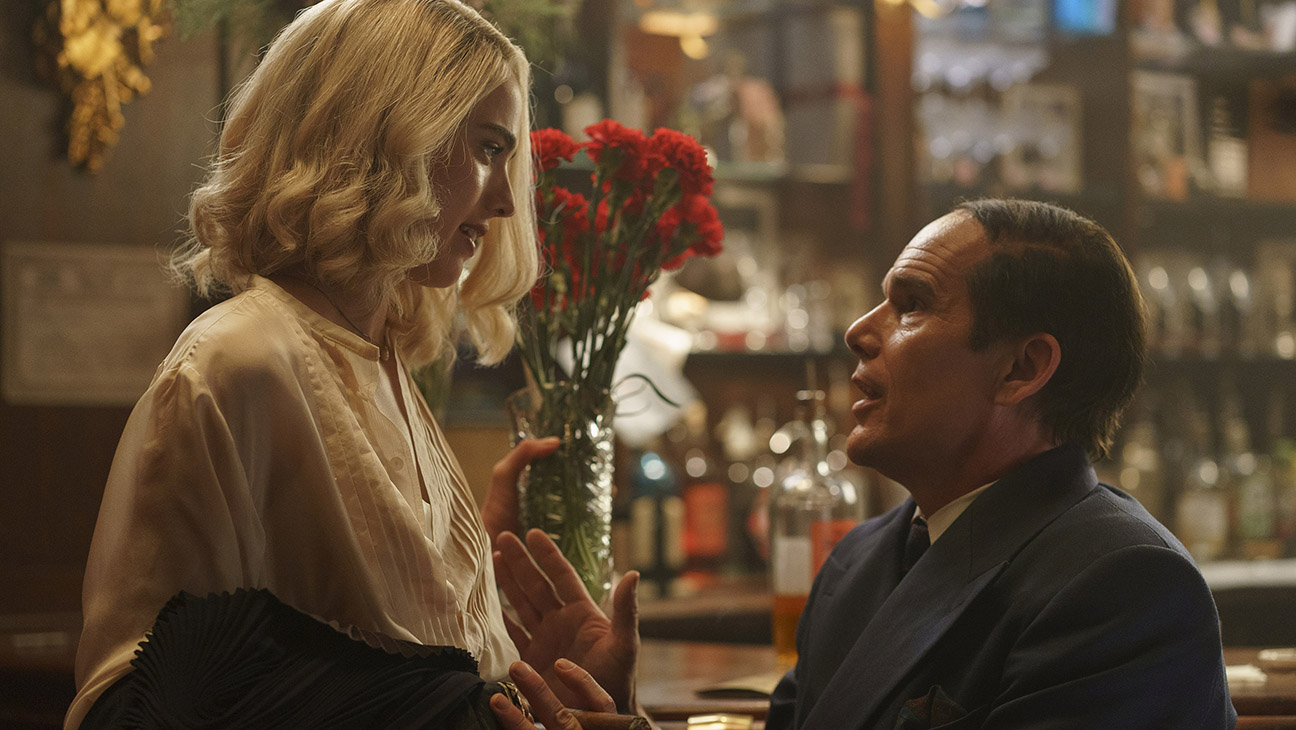
Film: Blue Moon (Written by Robert Kaplow)
Blue Moon is something of a wild card in the category. It’s a film that relatively few people have probably seen, and on paper it reads more like a stage play than a traditional screenplay—but that’s exactly where its strength lies. The film tells the story of Lorenz Hart, one half of the legendary Rodgers and Hart songwriting duo who dominated American show business in the 1940s and ’50s. The screenplay boldly focuses on a single night in the bar of a theater where the latest Broadway musical by his former writing partner is about to premiere. On the surface, very little happens: Lorenz—brilliantly played by Ethan Hawke—mostly wanders around the bar, harassing the bartender and chatting with patrons. Yet the writing makes it utterly compelling. You enter the night likely knowing very little about Hart, and gradually, almost imperceptibly, the script begins to peel back the layers of the man. Scene by scene, conversation by conversation, you find yourself sinking deeper into his world, becoming increasingly emotionally invested.
BEST ADAPTED SCREENPLAY
:max_bytes(150000):strip_icc()/BUGONIA-emma-stone-jesse-plemons-102925-63ca06aef80843cdb100a2fdd57c5337.jpg)
Film: Bugonia (Written by Will Tracy, a remake of Save The Green Planet! written by Jang Joon-hwan)
It’s difficult to talk about the screenplay of Bugonia without drifting into spoiler territory—so if you haven’t seen the film yet, consider this a warning. I’ve always had a soft spot for “what if?” scenarios in fiction—unsurprising, perhaps, given that Iron Sky was born out of exactly that kind of thinking—and while watching Bugonia, I felt a certain kinship with the writer. Admittedly, I’m not usually a fan of films that spend two hours torturing a female character, but the fact that the film ultimately reveals that the core conspiracy is actually true does make the whole ride work for me. And then, to top it off, the story resolves its central mystery in a way that feels delightfully reminiscent of old Star Trek: suddenly, we’re in these wonderfully outlandish sets meant to represent some distant galaxy or hidden reality. In a category that also includes heavyweights like One Battle After Another and Hamnet, it’s no surprise that the award will probably go elsewhere. Still, there’s a part of my heart that beats for the gleefully unhinged, conspiracy theory–soaked madness that is Bugonia.
BEST DIRECTOR

Film: Hamnet (Director: Chloé Zhao)
The big battle in Best Director will likely be fought between Paul Thomas Anderson for One Battle After Another and Ryan Coogler for Sinners, while the rest of the nominees watch from the sidelines. For me, though, the directing I’ll carry home from this year’s Oscars is Chloé Zhao’s work on Hamnet. Her filmmaking is gentle, intimate, and deeply focused on character. Around those human moments, she builds a world of images that reach toward the skies, a quiet universe that slowly invites the viewer in until it feels like wrapping yourself in a warm blanket—while you quietly cry your eyes out. If anything, her somewhat ill-fated detour into Marvel territory only highlights where her real strengths lie: telling stories about actual, fragile human beings. And that’s something I’ll always love watching her do.
BEST SUPPORTING ACTOR
:max_bytes(150000):strip_icc():focal(759x148:761x150)/one-battle-after-another-benicio-del-toro-121825-394609584ddf45a4b73fd016aa35000c.jpg)
Film: One Battle After Another (Benicio Del Toro)
One Battle After Another will likely sweep many of the major awards this year, and Sean Penn will probably—and quite deservedly—take home the Best Supporting Actor Oscar. Still, I want to give a nod to Benicio Del Toro’s character in the same film. He embodies that effortless, nonchalant cool—like someone who has already figured the world out and is in no hurry to explain it to anyone else. There’s something immensely enjoyable about watching him drift through the film’s madness exactly as he is, completely unfazed and entirely himself.
BEST SUPPORTING ACTRESS
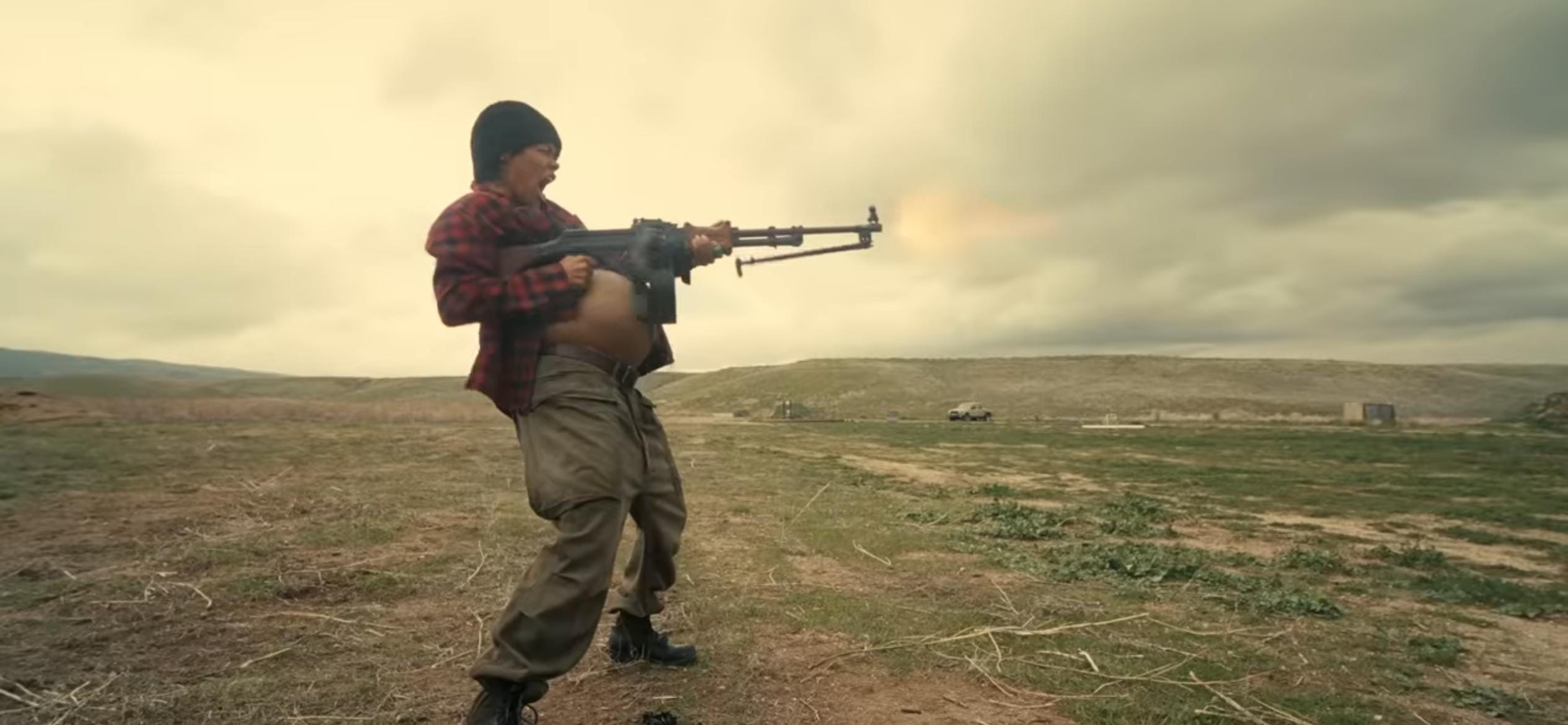
Film: One Battle After Another (Teyana Taylor)
While the Best Supporting Actress Oscar will most likely—and quite deservedly—go to Amy Madigan for her brilliant work in Weapons, I still want to highlight Teyana Taylor’s performance in One Battle After Another. Her character carries a remarkable weight throughout the film, and her presence resonates long after each scene ends—arguably second only to Sean Penn in terms of impact. It’s a category filled with excellent performances this year, but for me, Taylor’s sheer strength and intensity give her work an edge that lifts it above the rest.
BEST ACTRESS

Film: If I Had Legs I’d Kick You (Rose Burns)
Rose Byrne’s nomination for the rather obscure If I Had Legs I’d Kick You, directed by Mary Bronstein, is an interesting addition to the category. The film itself is solid, though it suffers from a somewhat uneven supporting cast—Conan O’Brien is perfectly fine in his role, but A$AP Rocky, unfortunately, is quite another matter. Still, Byrne’s performance is fantastic and by itself a very good reason to seek the film out. It reminds me a little of the situation with To Leslie a few years ago, when Andrea Riseborough unexpectedly landed an Oscar nomination. The film was barely known to the wider public, and there was plenty of chatter about possible campaigning shenanigans because she had powerful friends in Hollywood. But the simple truth was that Riseborough delivered an extraordinary performance and fully deserved the recognition. In much the same way, If I Had Legs I’d Kick You may not be dominating the box office conversation, but Byrne absolutely deserves her place among the bigger names. And while Jessie Buckley will likely—and deservedly—take the Oscar, it’s refreshing to see the Academy still leaving room for performances from films that aren’t necessarily at the center of the mainstream spotlight.
BEST ACTOR
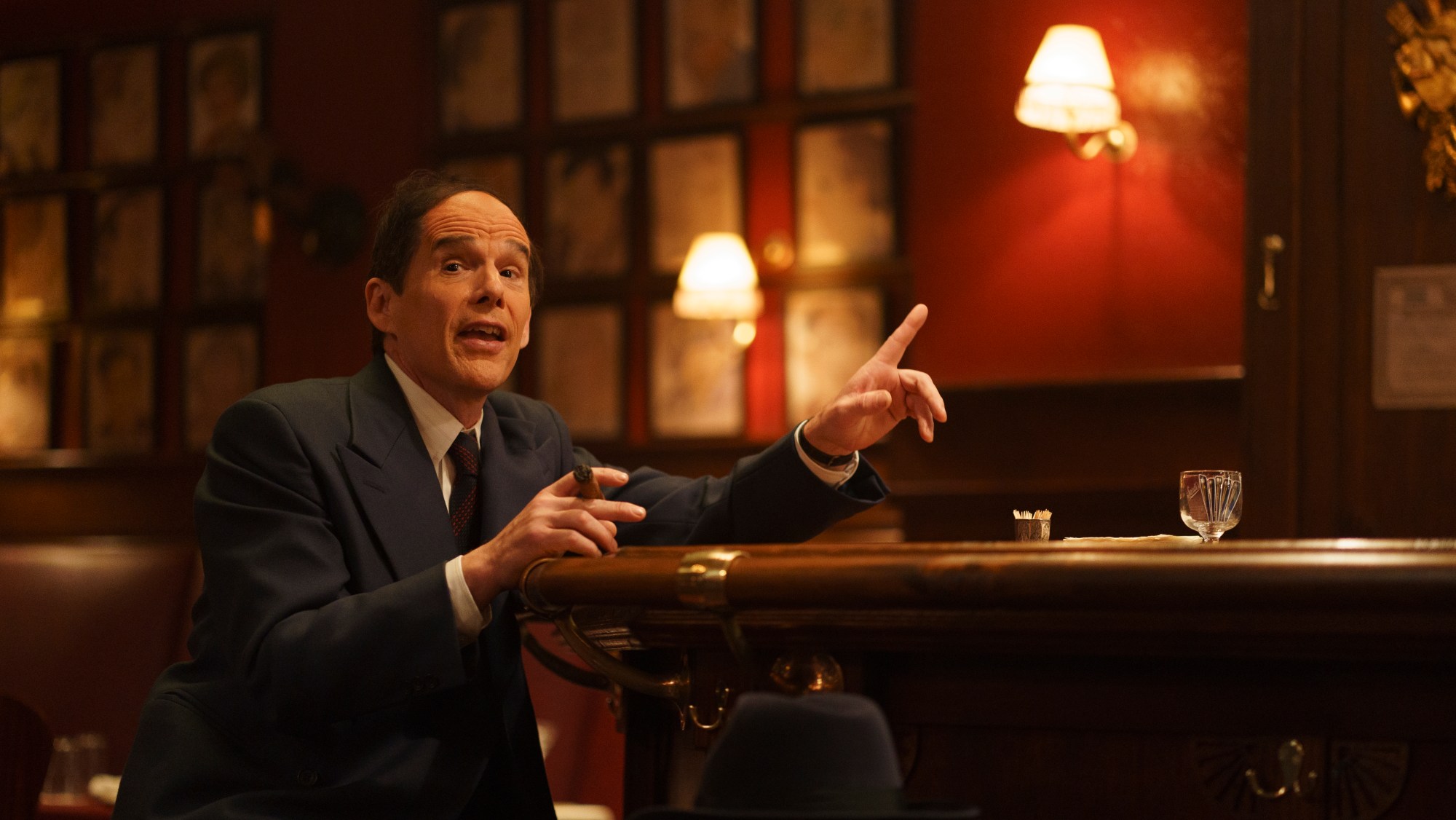
Film: Blue Moon (Ethan Hawke)
Ethan Hawke has now been nominated for an Oscar five times, yet he still hasn’t won—and, unfortunately, that streak will probably continue after this year’s ceremony. The award will most likely end up going to either Michael B. Jordan or Timothée Chalamet. Still, Hawke’s performance as Lorenz Hart in Blue Moon, directed by Richard Linklater, is something special. He throws himself into the role with remarkable energy and precision, delivering a performance that feels both tightly controlled and completely alive. Watching him work reminds me of the old romantic idea of actors who simply knew their lines, showed up on time, and focused on doing the job well rather than creating a spectacle around themselves. Whether that golden age ever truly existed is debatable—but Hawke certainly carries that spirit. And somehow I suspect he’s the kind of actor who arrives on set ready to work, rather than bringing a personal chef and demanding three breakfast options, two of which end up in the trash. And who knows—he might even enjoy a bit of opera and ballet, too.
BEST FILM
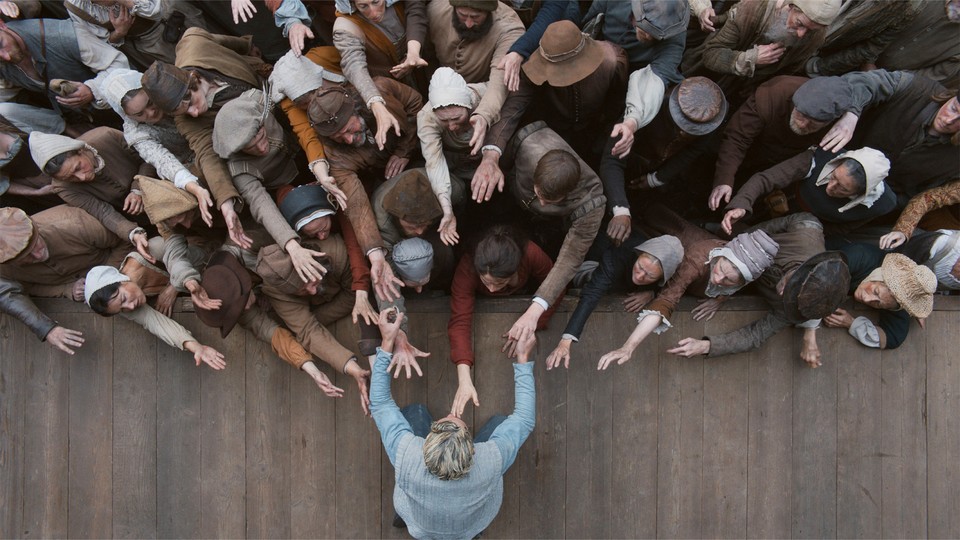
Film: Hamnet (Produced by Liza Marshall, Pippa Harris, Nicolas Gonda, Steven Spielberg and Sam Mendes)
Truth be told, the Best Picture Oscar could easily land in the hands of any of three films: Sinners, One Battle After Another, or Hamnet. I haven’t been following the awards-season tracking closely enough to say which one currently has the edge, but my gut feeling is that One Battle After Another will ultimately take it—and that might cause a bit of outrage, since many people seem to be rooting for Sinners. Hamnet, on the other hand, will likely walk away gracefully with Best Actress, which would be a beautiful and well-deserved recognition, even if one might wish the film received even more attention. But here’s why I think it matters that a film like Hamnet is in the race at all. Some viewers may see it as a somewhat old-fashioned film, and it certainly deals with harsh material—the death of a child—but it approaches that subject with extraordinary grace and sensitivity. The performances across the cast are stellar, and Jacobi Jupe’s work as Hamnet is particularly remarkable. In fact, I’d argue his performance alone outclasses many of the male performances in other films this year; personally, I think he deserved a Best Supporting Actor nomination, though perhaps his age played a role in that not happening. In any case, it’s a terrific, deeply heartfelt film that handles an incredibly difficult subject with care and compassion. This year’s Best Picture lineup is unusually strong—there’s really no film here that feels entirely undeserving of its nomination (well… maybe F1). But if you ask me which film brought the most emotional weight and quiet power to the table, the one carrying the biggest basket of goods this year is Hamnet.
 Vuorensola.com